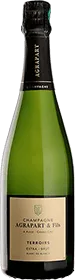
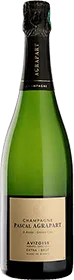
Agrapart is a family-run grower Champagne estate in Avize, in the heart of the Côte des Blancs. Founded in 1894, it is known above all for its Grand Cru blanc de blancs, made from old vines rooted in pure chalk, farmed without chemical pesticides or herbicides and finished with very little sugar. Among sommeliers and Champagne lovers, Agrapart is one of the benchmark names of the grower movement and a true insider's bottle. At Millesima, we are proud to offer two of its cuvées: Terroirs and L'Avizoise.
A Gem We're Proud to Carry
At Millesima, we carry the great Champagne names that collectors look for the most. But we also take pride in seeking out the rising stars: gems that are hard to find, made for connoisseurs and true enthusiasts. Agrapart is one of them, and an addition to our range that reflects our expertise in wine and Champagne.
The house in brief
Arthur Agrapart founded the estate in Avize in 1894, and it passed through the family from Auguste to Pierre. Pascal Agrapart began making the wines in 1984 and built the reputation the house enjoys today, growing the estate from about four hectares to roughly a dozen. He did so well before grower Champagne became fashionable. The estate remains in family hands, now in its fourth and fifth generation.
Agrapart is what is known as a récoltant-manipulant, or grower-producer: the family farms its own vines and makes and bottles its own wine, instead of buying grapes like many large houses.
What sets Agrapart apart
The vineyard covers a little over ten hectares, divided into about sixty small parcels. Most of them lie in the Grand Cru villages of Avize, Cramant, Oger and Oiry, where the vines, many of them more than 40 years old, root in the chalk of the Côte des Blancs. No chemical pesticides or herbicides are used. The soils are ploughed, and some parcels are worked by horse.
In the cellar, the philosophy is the same: minimal intervention. Fermentations use native yeasts, a large part of the wines is aged in old oak casks, and the wines are neither fined nor filtered. After long aging on the lees, each bottle is disgorged by hand, shortly before release. The house then finishes its wines with very little sugar, in the Extra Brut Champagne style.
What makes Agrapart a connoisseur's Champagne?
It is a grower's wine. In an era when Champagne is often a brand, Agrapart is the signature of one family and one place. Every stage, from pruning the vines to disgorgement, is controlled by the same hands.
It comes from some of the best chalk in Champagne. Avize, Cramant, Oger and Oiry are all Grand Cru villages, and their chalk gives the wines their tension, salinity and precision. The house's old vines give the wines their depth. It is a Champagne of terroir, not of recipe. Agrapart works parcel by parcel, and its cuvées range from blends of several Grand Cru villages to wines from specific plots in Avize. The most sought-after of them, Vénus, is named after the family's horse, which works the vineyard it comes from. Its dryness is a signature. Extra Brut means very little sugar, less than 6 grams per liter. With fruit this precise and chalk this present, the house lets the site speak rather than rounding it off. It is sought after by those who know. Agrapart is often mentioned alongside Anselme Selosse, its neighbor in Avize, as a reference for Chardonnay in the Côte des Blancs, even though the two styles are quite different. Production is small, the wines are not always easy to find, and that is precisely what makes them a favorite among sommeliers and enthusiasts.
Serving and pairing
Serve Agrapart at about 46 to 54 °F in a tulip or white wine glass rather than a narrow flute, which lets the aromas develop better. Oysters, crab, scallops, sushi and lightly cooked shellfish are classic partners, and so are aged goat cheeses.
Champagne Agrapart FAQ
Why is Agrapart a praised Champagne?
Agrapart is considered one of the finest grower estates of the Côte des Blancs, praised for the precision, chalkiness and purity of its Chardonnay.
What is grower Champagne?
It is Champagne made by the family that farms the vines, and not by a large house that buys most of its grapes. On the label, look for the letters RM, for récoltant-manipulant. Agrapart is a grower-producer.
What does Extra Brut mean?
Extra Brut means a very dry Champagne, with less than 6 grams of sugar per liter. Agrapart favors this style so that the fruit and the chalk can speak for themselves.
What does blanc de blancs grand cru mean?
Blanc de blancs means a Champagne made only from white grapes, in practice Chardonnay. Grand Cru is the highest rank of village in Champagne. Avize, Cramant, Oger and Oiry, the villages Agrapart relies on, are all Grand Cru.
What is the difference between a non-vintage and a vintage Agrapart?
A non-vintage cuvée blends several harvests to express the house's style with consistency. A vintage Champagne cuvée comes from a single harvest, here from selected terroirs in Avize. Our range includes both a Terroirs cuvée and an L'Avizoise cuvée.
How long can I age Agrapart?
Many Agrapart cuvées are delicious on release, and gain in complexity with a few years in a cool, dark cellar. Vintage cuvées can go longer.