Benoît Déhu in Fossoy: Meunier, biodynamics and oak from the family forest
A micro-estate born from the family vineyard
Fossoy is a village in the Aisne, upstream of Château-Thierry, on the western edge of the Champagne vineyards. The Déhu family has been growing vines here since 1787, and Benoît Déhu represents the eighth generation. After returning to the estate following a stint at Bollinger, he has been producing cuvées under his own name since 2011, from isolated plots of the family vineyard that are farmed separately. These wines should not be confused with those of Déhu Père & Fils, the family's historic label, whose Tradition and Grande Réserve cuvées are dosed Champagnes.
Meunier as a leading grape
Benoît Déhu has built his work around Pinot Meunier, the principal grape of the Marne Valley. His reference plot, La Rue des Noyers, covers 1.70 hectares of Meunier planted in the early 1970s and was the first to be converted to biodynamics, with part of the surface plowed by horse and trees replanted between the rows. The estate has been certified organic since 2020 and therefore features among the organic Champagnes in our selection.
Casks cut from Meilleray oak
All the cuvées are fermented and aged in cask, mostly 228-liter barrels, made by a Champagne cooper from oak from the Meilleray forest, which belongs to the family. Fermentations start with indigenous yeasts, malolactic fermentation is blocked, and every Champagne is disgorged without dosage, as a Brut Nature. These choices give the range its shared profile: intact acidity, a texture enriched by the oak and a saline finish.
Reading a Benoît Déhu label: the V for the base year, Champagne or still wine
The V and its two digits
Benoît Déhu's Champagnes do not claim a vintage: the letter V followed by two digits indicates the harvest year that serves as the base of the wine. Initiation V21 is thus based mainly on 2021, complemented by a perpetual reserve (a solera, where each new harvest is added to the wines of previous years). La Rue des Noyers V20 comes solely from the 2020 harvest, and Les Chaillots V15 from 2015. The number therefore indicates the age of the wine, without constituting a vintage declaration.
Champagne or still wine
La Rue des Noyers 2020, without the V, is not a Champagne. It is a still white wine made from pure Meunier, in the Coteaux Champenois appellation, from the same plot and also vinified in cask, with malolactic fermentation blocked. The plot in fact yields four wines: the white Champagne, a saignée rosé and two Coteaux Champenois, one white and one red. Opening the Champagne and the still white of the same year side by side shows what the second fermentation changes in one and the same grape.
Which Benoît Déhu cuvée to choose? Initiation, the single-plot cuvées, L’Orme and the rosés
Initiation, the entry point to the range
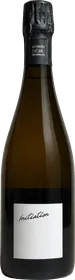
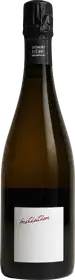
Initiation is the estate blend, first made with the 2015 harvest: about three quarters Meunier from La Rue des Noyers and one quarter Pinot Noir planted at the foot of the slope. It is the most approachable and the most versatile cuvée, equally at ease with oysters or a roast poultry. Initiation V18 offers an older version, three years further on, for those seeking more patina.
La Rue des Noyers and Les Chaillots, two readings of Meunier
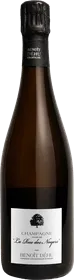
La Rue des Noyers is the estate's founding cuvée, a Blanc de Noirs of pure Meunier from a single plot and a single year. It shows the tension this grape, often confined to blends, can offer when it is vinified as a wine of place. Les Chaillots, another single-plot Meunier, comes from old vines planted on sands and sandstones that drain water quickly. It is the rarest bottle in the range and the one that has spent the longest time in the cellar.
L’Orme, Pinot Noir from Burgundian massal selection
L’Orme is a Blanc de Noirs of pure Pinot Noir, from 0.55 hectares located below La Rue des Noyers, on the site of former elm trees that gave it their name. Benoît Déhu planted it using a massal selection from Burgundy, that is, budwood taken from old vines rather than nursery clones. On these sandy soils, Pinot Noir yields a fluid, subtly spiced Champagne, designed for the table.
Two rosés, two methods
The rosés follow the dividing line of the range. Initiation V22 Rosé blends Meunier and Pinot Noir on a 2022 base. La Rue des Noyers V20 Rosé is a saignée rosé of pure Meunier, obtained by briefly macerating the juice with the skins. Where the first plays on strawberry and brioche, the second relies on tension and spice.
Aging Benoît Déhu Champagnes: preserved acidity and older base years
Acidity as a reserve of time
Blocking malolactic fermentation preserves the grape's malic acid, which is sharper than the lactic acid it would otherwise become. Benoît Déhu's Champagnes therefore go into the cellar with an acid backbone that carries them for several years.
Initiation V18 and Les Chaillots V15 for a wine with patina
The cuvées with the oldest base years show what time adds. Les Chaillots V15 displays a golden color shading into amber, and its acid structure still gives it a long way to go. Initiation V21, younger, is already opening up willingly.