Assistant


 Free delivery serviceFree ground shipping in NYC 5 boroughs for orders over $150 and free ground shipping for all instock orders over $450

 Secure PaymentVisa, American Express, Mastercard...
 Guaranteed provenanceAuthenticity & Traceability of origin
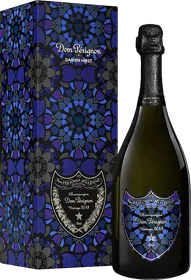
Dom Pérignon : Rosé Vintage Luminous 2009
In stock. Available for pick-up at store
Let's talk about this product!
A pairing in mind? A question about the vintage? Comparison with another product? Find the answers here...
Description
Characteristics and Tasting Notes of Dom Pérignon Rosé Vintage Luminous 2009
Tasting
Color
The color displays a light salmon-pink hue with coppery, orange glints, bright and perfectly clear, with a steady stream of fine, persistent bubbles.
Nose
The nose opens on red berry aromas – strawberry, raspberry – mingled with white peach, delicate floral notes and a touch of fine spice. With aeration, richer accents emerge, recalling orange oil, pomegranate, dried flowers and apricot, alongside subtle toasted and smoky nuances.
Palate
The palate is medium- to full-bodied, carried by the phenolic presence brought by the still red wine in the blend. The texture is creamy and expansive, supported by a very fine mousse and a ripe yet vibrant acidity that keeps the wine lively. The finish is long, savory and chalky, leaving a lingering, aromatic impression.
Food and wine pairings
This structured, gastronomic rosé pairs beautifully with white meats served in creamy, mushroom-based sauces, as well as with delicate seafood preparations and refined poultry dishes, where its texture and phenolic richness can echo the dish's own creaminess.
Serving and cellaring
Dom Pérignon Rosé Vintage Luminous 2009 is best served in a tulip-shaped glass at a temperature between 50°F and 54°F (10°C to 12°C), which allows its aromatic complexity to unfold while preserving the freshness of its mousse. A brief aeration of about thirty minutes before serving can help open up its bouquet.
Other characteristics
This champagne is dosed at 5 grams per liter, placing it in the brut category, with an alcohol content of approximately 12.5%.
Dom Pérignon Rosé Vintage Luminous 2009: A Structured, Phenolic Rosé from Champagne
The Estate
Dom Pérignon is the prestige cuvée of the Moët & Chandon house, part of the LVMH group. The brand's first vintage dates back to 1921, though it was not commercialized until 1936. Rooted in the Hautvillers abbey in Champagne, Dom Pérignon has built its identity on a vintage-only philosophy, relying on just two grape varieties. Since 2019, Vincent Chaperon has served as the house's cellar master, continuing the brand's long-standing pursuit of expressive, terroir-driven champagnes.
The Vineyard
The vineyard supplying Dom Pérignon spans close to 900 hectares across Champagne, with roughly two-thirds of the holdings located within grand cru villages, spread across 14 of the region's 17 grand cru communes, complemented by 15 premier cru sites. Among these, the historic Clos Sacré at the Hautvillers abbey remains a symbolic premier cru parcel included in the blends. For this rosé specifically, the still red wine component comes from pinot noir grown in the villages of Hautvillers, Aÿ and Bouzy.
The Vintage
The 2009 growing season in Champagne is regarded as an outstanding year, delivering grapes with notable ripeness alongside good natural freshness, resulting in wines with strong aging potential.
Winemaking and aging
Dom Pérignon Rosé Vintage Luminous 2009 is built from a blend of still white base wines made from chardonnay and pinot noir, to which a portion of still red wine, vinified separately from pinot noir grapes, is added to achieve its color and structure. The wine then rests on its lees for approximately 12 years before disgorgement, which took place around 2022, with a final dosage of 5 grams per liter. The "Luminous" designation refers to a specific bottle presentation rather than any difference in the winemaking process.
Grape Varieties
This cuvée is built on pinot noir, representing between 56% and 59% of the blend (including about 13% to 15% in the form of still red wine), and chardonnay, making up the remaining 41% to 44%.