Assistant


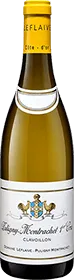
Domaines Leflaive : Bâtard-Montrachet Grand cru 2022
Only 1 available
In stock. Available for pick-up at store
Let's talk about this product!
A pairing in mind? A question about the vintage? Comparison with another product? Find the answers here...
Description
Tasting and Serving Notes for Domaine Leflaive's Bâtard-Montrachet Grand Cru 2022
Tasting
Color
The wine shows a deep, bright yellow with golden highlights, slightly more intense than its Bienvenues-Bâtard-Montrachet counterpart, a reflection of the ripeness and concentration carried by the fruit.
Nose
Still somewhat closed at this stage, the nose gradually opens onto orchard fruit such as apple and pear, joined by stone fruit, preserved lemon, and pastry-like notes of butter and puff pastry. Light honey, dried fruit, hazelnut, and white flower accents round out this rich aromatic register.
Palate
The palate is dense and weighty, built around an impressive volume of white fruit and a muscular structure that even suggests a faint tannic grip, an unusual sensation for a white wine. This power is kept in check by a crystalline streak of acidity on the finish, which lifts the wine rather than letting it feel heavy. The finish is long and focused, bringing back preserved lemon, peach, apple, butter, and pastry notes in a tight, racy conclusion.
Food and wine pairings
This Bâtard-Montrachet Grand Cru pairs naturally with rich, refined dishes such as foie gras, lobster, or veal sweetbreads served with a creamy, buttery sauce. It also suits fine fish like sole or turbot prepared with a beurre blanc or citrus-based sauce, as well as quality poultry served with a cream and mushroom sauce. Soft, bloomy-rind cheeses can carry the pairing through to the end of a meal.
Serving and cellaring
This Bâtard-Montrachet Grand Cru 2022 is built for extended cellaring; critics note that it should evolve for at a minimum ten to fifteen years, and likely longer, when stored under proper conditions.
A Structured Bâtard-Montrachet Grand Cru from Burgundy's Côte de Beaune
The Estate
Domaine Leflaive was founded in Puligny-Montrachet, in the heart of Burgundy's Côte de Beaune, at the start of the twentieth century, when Joseph Leflaive assembled the property's original vineyard holdings. The estate has remained entirely family-owned since then, passing from Joseph to his sons and later to Anne-Claude Leflaive, who converted the entire vineyard to biodynamic farming in 1996. Today, Domaine Leflaive is led by Brice de La Morandière, with Amandine Brillanceau serving as technical director since 2025. The property is recognized for its pioneering biodynamic practices and its historic holdings across Puligny-Montrachet's grand and premier crus.
The Vineyard
The Batard-Montrachet grand cru lies just below Montrachet itself, straddling the communes of Puligny-Montrachet and Chassagne-Montrachet on clay-limestone soils with a higher proportion of clay than neighboring crus, which gives the wine its characteristic breadth and density. Domaine Leflaive's holdings in this appellation are split among several plots planted at different times, combining older vines dating back to the 1960s with more recently replanted parcels, a mix that balances depth and concentration with freshness. The vines are farmed biodynamically, with horse-plowing used on these grand cru parcels to limit soil compaction and preserve soil life.
The Vintage
The 2022 growing season in Burgundy ran warmer than seasonal averages, with a water deficit present from early in the cycle that never reached extreme levels. These conditions led to a healthy harvest with correct yields and even ripening, producing grapes with good concentration while preserving the acidity needed for balance.
Winemaking and aging
Grapes destined for the Bâtard-Montrachet Grand Cru 2022 were hand-harvested with careful sorting, following close monitoring of ripeness plot by plot. The fruit was pressed gently using a slow pneumatic press, then settled before being transferred to oak barrels, where both alcoholic and malolactic fermentations took place. The wine was aged on its lees in barrel, part of which was new oak, before being moved to stainless steel tank for a further period of aging on fine lees ahead of bottling. Fining is kept to a minimum and filtration is applied only lightly, if at all, to preserve the wine's texture and character.
Grape Varieties
This wine is produced from 100% chardonnay.