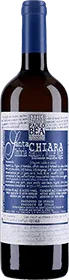
Paolo Bea : Sagrantino di Montefalco Passito 2011
In stock. Available for pick-up at store
Let's talk about this product!
A pairing in mind? A question about the vintage? Comparison with another product? Find the answers here...
Description
Characteristics and tasting tips for the Sagrantino di Montefalco Passito 2011 Paolo Bea
Tasting
Color
The color is a deep, dark ruby with a slight haze. Orange and brick-tinted reflections show along the rim and reflect the wine's long aging. The haze is consistent with the estate's refusal to use artificial stabilizers.
Nose
The nose is complex and layered. Dried fruit leads, with fig, plum, raisin and dusty walnut, followed by cherries soaked in rum. Spice and sweet notes follow, including cinnamon, grated dark chocolate, burnt brown sugar, caramel, toffee and a hint of coffee. Sage, clove, quinine and balsamic touches add freshness, and violet and lavender lend a floral lift. The aromas open further with aeration.
Palate
The palate is silky and enveloping. The sweetness is moderate and is offset by lively acidity. The tannins are still present but soft, firm without being harsh. Tart red fruit such as raspberry mingles with licorice, gentle herbal notes and blood orange. Some tasters even perceive a slightly salty edge as the wine lingers in the mouth. The finish is long, with caramel, mocha, chocolate, lavender and violet.
Food and wine pairings
Giampiero Bea himself suggests serving this wine with well-aged Parmigiano Reggiano. The salty, granular richness of the cheese plays against the wine's concentration and acidity. The same logic applies to other long-aged hard cheeses, such as aged Grana Padano or mature pecorino, and to dry, firm blue cheeses. The wine also suits desserts built on dark chocolate, coffee, prunes, figs or toasted nuts, as well as sweet-and-savory dishes such as lamb with dried fruit and spices. It can also be enjoyed on its own as a contemplative sipping wine.
Serving and cellaring
The Sagrantino di Montefalco Passito 2011 is best served at around 57–61°F (14–16°C), a little cooler than a typical red but warmer than a white dessert wine. Pour small amounts in a medium or large red wine glass rather than a liqueur glass. Opening the bottle ahead of time, or decanting, helps the aromas unfold. Because the wine is not heavily filtered or stabilized, a light sediment may be present, which is normal. No official cellaring window is provided by the estate.
Other characteristics
This is a sweet red wine in the passito style, with about 90 to 95 g/L of residual sugar. The sweetness is moderate for the style, and acidity and tannins remain very present. It is bottled in 375 ml half bottles. A critic reports a production of only 3,699 bottles, and each bottle is numbered by the estate.
A Sagrantino di Montefalco Passito from Umbria: a dried-grape red by Paolo Bea
The Estate
The Bea family has farmed in Montefalco, in Umbria, since at least the 16th century. Paolo Bea began bottling wine under his own name in 1980, which marks the creation of the estate as a winemaking operation. Still entirely family-owned, the property covers about 14.5 hectares, with roughly 11 hectares of vines. Paolo Bea remains the symbolic head of the family, while his son Giampiero oversees the vineyard and bottling. Giampiero cofounded the ViniVeri group in 2004. The estate follows a non-interventionist approach and is ISO 14001 certified.
The Vineyard
The Sagrantino di Montefalco Passito comes from the Montefalco appellation (DOCG) in Umbria. No technical sheet specifies the exact plots used for the 2011. The estate's other Sagrantino cuvées come from hillside vines at about 400 meters in elevation, on mainly clay soils, sometimes interspersed with gravel. Sagrantino is a late-ripening, highly tannic variety. The Bea property is a patchwork in which vines sit alongside woods, olive groves, vegetable gardens and wild herbs. The estate avoids synthetic chemicals and even copper, and uses ladybugs as a natural pest control. Harvesting is done by hand, and by tradition only during a waning moon.
Winemaking and aging
For the Sagrantino di Montefalco Passito 2011, the Sagrantino grapes are picked late and then left to dry for about four months, until January. During this time a white mold develops on the grapes, which reach roughly 30% sugar. The raisined grapes are then destemmed and crushed. Fermentation is slow and ends naturally when the wine retains about 90 to 95 g/L of residual sugar. According to one tasting report, 100 kg of grapes yield only 8 to 10 liters of wine. The wine is aged for at least four years in stainless steel tanks, followed by further aging in bottle. A tasting report indicates that it was bottled in 2020. The estate uses no artificial stabilizers.
Grape Varieties
100 % Sagrantino