Assistant


 Free delivery serviceFree ground shipping in NYC 5 boroughs for orders over $150 and free ground shipping for all instock orders over $450

 Secure PaymentVisa, American Express, Mastercard...
 Guaranteed provenanceAuthenticity & Traceability of origin

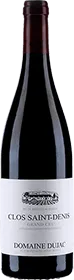
Dujac : Clos Saint-Denis Grand cru Domaine 2020
Only 1 available
In stock. Available for pick-up at store
Let's talk about this product!
A pairing in mind? A question about the vintage? Comparison with another product? Find the answers here...
Description
Characteristics and Tasting Notes of the Clos Saint-Denis 2020 Dujac
Tasting
Color
The wine shows a medium-intensity ruby red hue, bright and relatively translucent, typical of a vinification method that favors delicacy over heavy extraction.
Nose
The nose opens with a touch of youthful reduction that fades with aeration, revealing brambly red fruit, blackberry, and cranberry notes, layered with rose petal and peony florals and a subtle wild, animal nuance.
Palate
The palate is medium-bodied yet sappy and concentrated, framed by fine, tightly-knit tannins with a spicy, peppery edge. The acidity keeps the wine lifted and fresh, while the finish, though long and persistent, appears slightly tight at this stage, hinting at a wine built for the cellar.
Food and wine pairings
This Clos Saint-Denis pairs beautifully with roasted white meats such as poultry served with a creamy mushroom sauce, where the silky tannins and bright acidity of the wine echo the earthy, woodsy character of the dish. It also complements veal or young lamb prepared with root vegetables, and, with a few more years of age, will shine alongside game birds or mushroom-based preparations that bring out its more savory, forest-floor notes.
Serving and cellaring
The Clos Saint-Denis 2020 is best served at a slightly cool temperature, around 59–61°F, to preserve its aromatic finesse and tension. Given its youthful tightness, decanting is recommended to allow the wine to open up fully.
Other characteristics
This is a dry red wine, with no residual sugar information disclosed.
A Red Burgundy Reflecting the Floral, Refined Character of Clos Saint-Denis
The Estate
Domaine Dujac was founded in 1968 in Morey-Saint-Denis, in the heart of Burgundy's Côte de Nuits, by Jacques Seysses. Today the estate is run by the next generation, Jeremy Seysses, his wife Diana, and his brother Alec, who continue the family's hands-on approach to winemaking. Dujac is fully certified organic since 2011 and also draws on biodynamic practices across its vineyard holdings, which include an exceptional concentration of grand cru sites in the Côte de Nuits. The estate is widely regarded as one of the leading names in contemporary Burgundy.
The Vineyard
The Clos Saint-Denis grand cru lies on the upper slope of Morey-Saint-Denis, between Clos de la Roche and Clos des Lambrays, at an elevation of roughly 270 to 310 meters with an east to southeast exposure. The soils vary across the climat, from brownish-red earth rich in rounded limestone fragments at the lower, eastern end, to thinner, gravelly limestone scree at the higher, western end. Domaine Dujac holds the largest individual parcel within this grand cru, cultivated without herbicides as part of the estate's organic and biodynamic farming approach.
The Vintage
The 2020 growing season in Burgundy was marked by a mild, dry winter and an early budbreak, followed by a cool, windy May and a successful flowering in June, though late-season cold and storms caused some coulure and millerandage. Summer brought pronounced heat in July and August, requiring careful canopy management to protect the grapes from sunburn. Estates that paid close attention to leaf cover and harvested with care were able to preserve freshness despite the warm conditions.
Winemaking and aging
In keeping with Dujac's longstanding approach, the Clos Saint-Denis 2020 was vinified with a significant proportion of whole clusters, left largely uncrushed to preserve delicacy and texture. Fermentation relied solely on indigenous yeasts, with a cuvaison of about two weeks combining gentle punch-downs early on and softer pump-overs toward the end. Following a light pressing in a pneumatic press and gravity transfer to the cellar, the wine was aged for roughly 14 to 18 months in oak barrels, with a meaningful share of new wood integrated with care.
Grape Varieties
100 % pinot noir.