Assistant


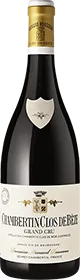
Armand Rousseau : Chambertin-Clos de Beze Grand cru 2019
common.common:lowStock
In stock. Available for pick-up at store
Let's talk about this product!
A pairing in mind? A question about the vintage? Comparison with another product? Find the answers here...
Description
Tasting and Serving Notes for the Chambertin-Clos de Bèze Grand Cru 2019 by Armand Rousseau
Tasting
Color
This Chambertin-Clos de Bèze reveals a deep, bright red wine color, with a dense core that recalls dark ruby, reflecting a rich concentration typical of this grand cru.
Nose
The nose unfolds with great complexity, combining dark and red fruit, oriental spices, rose petals and incense. Notes of smoked tea, damp earth, dark chocolate and grilled meat add depth, while hints of orange zest, white pepper, musk and truffle bring further nuance. With aeration, undergrowth and moss notes also emerge.
Palate
The palate is full-bodied and enveloping, carried by a velvety texture and a concentrated, fleshy core of fruit. Succulent acidity meets powdery, finely integrated tannins, giving the wine both density and freshness. The finish is remarkably long, chalky and tactile, with a mineral, almost saline edge that lingers well after the last sip.
Food and wine pairings
This wine pairs beautifully with roasted game, such as venison served with a blackcurrant jus, where the dark fruit echoes the wine's own fruit profile. It also matches traditional Burgundian braised beef dishes, where the rich, slow-cooked sauce finds a natural partner in the wine's structure. On the cheese board, a creamy, washed-rind cheese such as Époisses offers a classic and satisfying pairing, standing up well to the wine's acidity and tannic grip.
Serving and cellaring
Chambertin-Clos de Bèze Grand Cru 2019 is best opened about 90 minutes before serving and decanted to allow it to fully open, particularly in its youth. A serving temperature of around 16–18°C is recommended to highlight its aromatics without emphasizing the alcohol. A large-bowled Burgundy or Bordeaux-style glass is ideal, allowing the bouquet to develop fully in the glass.
Other characteristics
This wine has an alcohol content of approximately 13%, reflecting full phenolic ripeness achieved in the 2019 vintage without any sense of overripeness.
A Grand Cru from Gevrey-Chambertin Expressing the Depth of the Clos de Bèze
The Estate
Domaine Armand Rousseau was established in Gevrey-Chambertin in the early 1900s, built on vineyard parcels inherited by Armand Rousseau. Today the estate farms about 15.33 hectares entirely planted with pinot noir, with a significant share in grand cru climats, across Gevrey-Chambertin and Morey-Saint-Denis in Burgundy. The domaine is currently led by Éric Rousseau, grandson of the founder, together with his daughter Cyrielle, representing the fourth generation. Known as a pioneer of estate bottling and export, the family has preserved full ownership and a consistent, terroir-focused philosophy for more than a century.
The Vineyard
The fruit for this wine comes from the domaine's 1.42-hectare holding within the Chambertin-Clos de Bèze grand cru, located in Gevrey-Chambertin, Côte de Nuits. The vines occupy three plots, partly in the upper section of the clos on stony Bathonian limestone-clay soils, and partly on mid-slope land marked by Bajocian limestone and marl. The vineyard faces east to southeast and is planted at high density, around 11,000 vines per hectare, with vines averaging 40 to 45 years old. Yields are kept low, generally between 30 and 40 hectoliters per hectare, supporting concentration in the fruit.
The Vintage
The 2019 growing season in the Côte de Nuits was regarded as an outstanding vintage by the Revue du Vin de France, combining full phenolic ripeness with strong concentration and balance, despite periods of challenging weather during the growing cycle. These conditions allowed grapes grown at high density and low yields to reach excellent maturity while retaining structural freshness.
Winemaking and aging
For Chambertin-Clos de Bèze Grand Cru 2019, around 90% of the grapes were destemmed before fermenting in open-top stainless steel vats for close to three weeks, with controlled temperatures reaching between 31 and 34°C. The wine was then gently pressed using a pneumatic press before aging for about 18 months in 100% new French oak barrels from the François Frères cooperage. During this period, the wine underwent two rackings, with malolactic fermentation occurring naturally in barrel. Bottling took place in April, by gravity, following a light filtration.
Grape Varieties
This wine is produced from 100% pinot noir.