Assistant


 Free delivery serviceFree ground shipping in NYC 5 boroughs for orders over $150 and free ground shipping for all instock orders over $450

 Secure PaymentVisa, American Express, Mastercard...
 Guaranteed provenanceAuthenticity & Traceability of origin
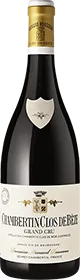
Armand Rousseau : Chambertin-Clos de Beze Grand cru 2018
Only 1 available
In stock. Available for pick-up at store
Let's talk about this product!
A pairing in mind? A question about the vintage? Comparison with another product? Find the answers here...
Description
Tasting and Pairing Characteristics of the Chambertin-Clos de Bèze Grand Cru 2018 from Armand Rousseau
Tasting
Color
The wine shows a deep, saturated purple color that extends all the way to the rim, reflecting the ripeness and phenolic concentration typical of this generous vintage.
Nose
The nose is complex and layered, opening on notes of smoked wood and ripe burlat cherry, followed by blackcurrant, blackberry and dark chocolate. Touches of oriental spice, incense and a discreet smoky nuance add further depth, while a subtle mineral thread runs through the aromatic profile, lending it an elegant, almost silky quality.
Palate
The palate is full, fleshy and enveloping, with a ripe fruit core wrapped in a velvety, almost caressing texture. The tannins are abundant yet finely grained, often described as powdery, giving the wine a solid but refined structure. Well-integrated cedary oak frames the fruit without overpowering it, and the finish is remarkably long, closing on fresh, slightly chalky notes that balance the wine's natural richness.
Food and Wine Pairings
This wine pairs beautifully with roasted or braised red meats, game dishes, and preparations built around mushrooms or truffle. Its smoky, spiced character also makes it a fitting match for richly sauced poultry, such as a guinea fowl or capon served with a reduced jus, where the delicacy of the meat echoes the wine's fine-grained tannins.
Serving and Cellaring
This wine is built for long cellaring, with a recommended drinking window of roughly 15 to 30 years from the vintage, meaning it can be enjoyed until approximately 2048. While already expressive and generous in its youth, it will continue to gain complexity with time in the cellar.
Other Characteristics
This grand cru is produced from a limited parcel of around 1.5 hectares within the Clos de Bèze climat, which naturally restricts production and reinforces the wine's rarity. It is aged in 100% new oak barrels, a choice that provides structure for its long aging potential.
Chambertin-Clos de Bèze Grand Cru 2018: A Structured and Aromatic Burgundy Pinot Noir from Domaine Armand Rousseau
The Estate
Established in 1909, when Armand Rousseau inherited the vineyard parcels and the building that still houses the estate today, Domaine Armand Rousseau is based in Gevrey-Chambertin, in the heart of Burgundy's Côte de Nuits. Over four generations, the family has assembled a portfolio centered on some of the region's most prestigious grand cru climats, including Chambertin and Chambertin-Clos de Bèze. The estate is run today by Eric Rousseau alongside his daughter Cyrielle, representing the fourth generation. Spanning around 15.33 hectares, Armand Rousseau is regarded as one of Burgundy's benchmark producers for grand cru pinot noir.
The Vineyard
This Chambertin-Clos de Bèze comes from a parcel of about 1.5 hectares within this historic climat, first delineated by monks in the 7th century. The vines benefit from an east and southeast exposure typical of the Gevrey-Chambertin hillside, with well-draining soils containing pebbles and occasional sand that favor finesse and freshness in the resulting wine. Planted at a high density of around 11,000 vines per hectare, with an average vine age of 40 to 45 years, the parcel is farmed with low yields of around 30 to 40 hectoliters per hectare. Mechanical soil work without insecticides or chemical inputs is practiced, along with green harvesting and leaf thinning to maintain healthy, well-aerated fruit.
The Vintage
The 2018 growing season in Burgundy was marked by a warm, sun-filled summer, which delivered generous ripeness and higher natural concentration than average. This favorable weather pattern required careful vineyard management to preserve freshness and balance in the resulting wines.
Winemaking and Aging
The wine was fermented in open stainless steel vats over a period of 18 to 20 days, with temperatures reaching up to 31–34°C, accompanied by gentle punching down and pumping over to ensure a soft, progressive extraction. Malolactic fermentation took place naturally in barrel. It was then aged for about 18 months in 100% new oak barrels, with two rackings during this period. Bottling was carried out by gravity directly from the barrels, following a light plate filtration, in order to preserve the wine's texture and natural stability.
Grape Varieties
100% Pinot Noir.