Assistant


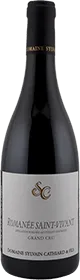
Sylvain Cathiard : Romanée-Saint-Vivant Grand cru 2023
Only 1 available
5% off orders of 12 bottles or more. Offer valid on In-Stock wines only, mix and match possible, excluding rare wines, on-sale items and no discount applicable items.
In stock. Available for pick-up at store
Let's talk about this product!
A pairing in mind? A question about the vintage? Comparison with another product? Find the answers here...
Description
Characteristics and Tasting Notes of the Romanée-Saint-Vivant Grand Cru 2023 from Domaine Sylvain Cathiard
Tasting
Nose
The aromatic profile is notably transparent, offering a pure and clearly delineated expression of pinot noir rather than a dense or masked bouquet.
Palate
The palate is medium-bodied, built around finely filigreed tannins that bring a silky, refined texture rather than raw power. The overall impression is one of restraint, with remarkable symmetry and poise, favoring finesse and precision over sheer muscle.
Serving and Cellaring
The Romanée-Saint-Vivant Grand Cru 2023 is built for extended aging, with an estimated drinking window stretching from 2028 to 2055.
A Romanée-Saint-Vivant Grand Cru Defined by Finesse and Precision
The Estate
Domaine Sylvain Cathiard was founded in the 1930s in Vosne-Romanée, in the heart of Burgundy's Côte de Nuits. The estate now spans roughly 12.5 hectares, mainly in Vosne-Romanée with additional plots in Nuits-Saint-Georges and Chambolle-Musigny. Today it is run by Sébastien Cathiard, fourth generation of the family, who has directed the property since the 2011 vintage. The domaine is known for its confidential, highly sought-after cuvées and its meticulous, low-intervention approach to winemaking.
The Vineyard
The Romanée-Saint-Vivant comes from a tiny parcel of about 0.16 to 0.17 hectare in the Les Quatre Journaux lieu-dit, planted in 1919. Located on the lower-mid slope of Vosne-Romanée, just south of Romanée-Conti and Richebourg, the site benefits from east-southeast exposure and calcareous Bathonian bedrock topped by deeper marl-limestone soils than its neighboring grand crus. This depth of soil tends to favor a more floral, aromatically open expression of pinot noir while preserving refined tannic structure. The vines are farmed according to organic principles, though without formal certification.
Winemaking and Aging
For the Romanée-Saint-Vivant Grand Cru 2023, the grapes are entirely destemmed before a cold pre-fermentation maceration of about ten days. Fermentation relies on native yeasts, with total maceration time extending up to 30 days and temperatures reaching as high as 32°C. The wine is then aged for 15 to 18 months in oak barrels, with two-thirds new wood for this vintage, and sulfur dioxide is added only after malolactic fermentation, in modest doses. The wine is neither fined nor filtered before bottling.
Grape Varieties
100% pinot noir.