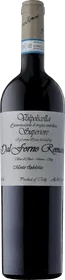
Dal Forno Romano : Amarone Della Valpolicella 2006
In stock. Available for pick-up at store
Let's talk about this product!
A pairing in mind? A question about the vintage? Comparison with another product? Find the answers here...
Description
Characteristics and Tasting Tips for Amarone della Valpolicella 2006 Dal Forno Romano
Tasting
Color
The color is a very dark ruby, close to a deep garnet and almost opaque. Violet highlights show in youth, and the wine is often described as inky.
Nose
The nose is intense and layered. It opens on preserved black fruits (blackberry, plum, prune, cassis) and black cherry, sometimes recalling maraschino or kirsch. Dried fig, dates, and raisins follow, along with a fruitcake character. Cocoa, dark chocolate, chocolate fudge, coffee, and mocha add depth. Spices such as cinnamon, clove, star anise, soft pepper, and nutmeg join balsamic and menthol touches. Graphite, smoke, and tar bring a mineral edge, while tobacco, leather, and truffle appear with age. Discreet floral notes of rose petal and violet add finesse.
Palate
The palate is dense and rich, with a rounded, almost oily attack. Lively, mouthwatering acidity and firm, fine-grained tannins quickly give it structure. The impression of sweetness comes from the high alcohol, the extract, and the glycerin-like richness rather than from residual sugar, so the wine remains dry. The alcohol, around 17%, is well integrated. The finish is very long, lingering on black fruit, cocoa, spice, tobacco, and smoky or mineral nuances.
Food and wine pairings
The estate's recommendations center on rich, flavorful dishes. This Amarone pairs with braised beef ribs, long-aged hard cheeses such as Parmigiano Reggiano or Grana Padano, and game stews such as wild boar or venison. Dark chocolate with a high cocoa content also works, as do desserts built on dark chocolate, dried fruit, and caramel, provided they are not sweeter than the wine. It is also often described as a "vino di meditazione," well suited to slow sipping with a few pieces of dark chocolate, dried fruit, or aged cheese.
Other characteristics
This is a dry Amarone, fermented almost completely, with little residual sugar. Its alcohol content is around 17%. Production of the 2006 vintage was limited, estimated at about 1,200 cases, or roughly 14,000 to 15,000 bottles.
A Dense, Dry Amarone della Valpolicella from Dal Forno Romano in Veneto
The Estate
Founded in 1983 by Romano Dal Forno, the Dal Forno Romano estate is based in Cellore d'Illasi, in the Val d'Illasi east of Verona, in Italy's Veneto region. Rooted in several generations of family grape growing, it farms about 34 hectares, 18 of them owned. The estate remains family-owned, and Romano's son Marco has overseen production since 2020. It is known for very dense plantings, aging in new barrels, and a deliberately short range of three wines: Valpolicella, Amarone, and, in some vintages, Recioto Vigna Seré.
The Vineyard
The grapes for this Amarone della Valpolicella come from the Val d'Illasi, a valley east of Verona that lies just outside the historic Classico zone but within the broader appellation area. The vines grow around the hamlet of Lodoletta, which gives its name to the Monte Lodoletta cuvée. The terrain is made up of hills and moderate slopes at the foot of the pre-Alps, with exposures often facing south or southwest. Soils are generally alluvial, marly, and limestone- and basalt-based, which provides good drainage. Planting density is close to 13,000 vines per hectare, a level reached gradually from the mid-1990s onward. Yields per vine are very low. Only the smallest, airiest bunches are harvested by hand, with strict sorting.
The Vintage
In Veneto, 2006 was marked by large temperature differences between day and night during the ripening season. Warm days allowed full phenolic ripeness in late-ripening varieties such as Corvina. Cool nights preserved acidity and encouraged the build-up of aromatic compounds, which later gained complexity during the drying of the grapes.
Winemaking and aging
For the Amarone della Valpolicella 2006, the grapes were harvested at advanced ripeness between late September and late October. They were then sorted and dried for about 120 days in temperature-controlled rooms before pressing. Fermentation was followed by a skin maceration lasting several months. Temperature was tightly controlled, notably through floor heating in the cellar, so that the very concentrated must could ferment through to a dry style. The wine was then aged for at least four years in small new oak barrels. It rested for several more years in bottle before release.
Grape Varieties
- Corvina (60%)
- Rondinella (20%)
- Oseleta (10%)
- Croatina (10%)