Assistant


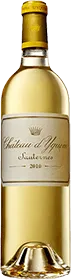
Chateau d'Yquem 2008
5% off orders of 12 bottles or more. Offer valid on In-Stock wines only, mix and match possible, excluding rare wines, on-sale items and no discount applicable items.
In stock. Available for pick-up at store
Let's talk about this product!
A pairing in mind? A question about the vintage? Comparison with another product? Find the answers here...
Description
Characteristics and tasting tips for Château d'Yquem 2008 Château d'Yquem
Tasting
Color
The wine shows a luminous, relatively light yellow with golden highlights. It looks young for a sweet wine.
Nose
The nose is complex and combines honey, white flowers, yellow and exotic fruits, and citrus. Linden blossom, orange blossom and vanilla add finesse, while white peach, lemon and a hint of quince build a fruity core. Spiced pear, apricot, cooked Golden Delicious apples and mirabelle plums follow. Botrytis comes through clearly, with a peppery, delicate edge. Sweet spices and coconut reflect the oak aging.
Palate
The palate is harmonious. A concentrated, sweet richness is carried by a fine, persistent line of acidity that gives the wine tension and energy. White peach, lemon, light honey and quince appear alongside well-integrated oak and lingering spice. The texture is dense and full without feeling heavy. The very long finish brings back orange peel, pineapple, toasted nuts and honeyed apricots.
Food and wine pairings
This sweet wine goes with classic Sauternes pairings such as pan-seared or semi-cooked foie gras, especially with dried or stone fruits like apricots and peaches. Blue cheeses such as Roquefort, Stilton and Gorgonzola also work well. Its acidity makes it suitable for more elaborate savory dishes, including a lamb tagine with dried apricots, poultry in a sweet white wine sauce, or sea bream with ginger. For dessert, choose lightly sweetened preparations based on white peach, quince, clementine or tangerine, with a touch of honey and gentle spices. Avoid very sweet or creamy desserts.
Other characteristics
This white wine is a sweet (liquoreux) Sauternes AOC. It has an alcohol content of 13.5 % and about 139 g/l of residual sugar, with a pH of approximately 4.75. Yields for this vintage were around 15 hl/ha.
A Sauternes from Bordeaux that pairs dense sweetness with lively acidity
The Estate
Château d'Yquem is a Sauternes estate south of Bordeaux whose history reaches back to the 16th century, when Jacques Sauvage received the feudal tenure of the property. The Sauvage and Lur Saluces families then held it for roughly four centuries. In 1855 it was ranked Premier Cru Supérieur, the only Sauternes estate to hold this title. Owned by the LVMH group since 1999, it covers 113 hectares of vines, about 100 of which are typically used for the grand vin. Lorenzo Pasquini oversees operations, and the vineyard has been certified organic since 2022.
The Vineyard
The vineyard lies in the Sauternes appellation, in the Gironde department about 55 kilometers south of the city of Bordeaux. The vines sit on a hilltop between 40 and 75 meters above sea level, on clay soils over a limestone base. The nearby Ciron and Garonne rivers produce the morning mists that, together with afternoon sun and wind, encourage noble rot (Botrytis cinerea). Roughly 100 kilometers of underground drains help evacuate excess water. The vineyard is divided into nearly 150 parcels with different soils, and 90 % of them have remained unchanged for about 150 years. The estate has never used herbicides. Its organic certification came in 2022, and practices include green manure and reduced use of sulfites in the cellar.
The Vintage
The 2008 growing season in Sauternes brought changeable weather, with warm and cold spells alternating. A frost in April reduced the crop potential without causing major damage. A cold, dry September slowed the ripening of the Sémillon. Botrytis developed more gradually than in hotter, wetter vintages. Harvest began on September 15 and required six successive passes through the vineyard.
Winemaking and aging
For Château d'Yquem 2008, around 200 pickers worked in several passes, selecting only the berries touched by noble rot. The grapes reach the cellar within the hour. They are pressed three to four times, and the sugar richness of the juice increases with each pressing. Fermentation takes place in barrels, generally new ones. The wine then ages for up to 20 months in new oak, with frequent topping up and rackings. After a first period of six to eight months, the estate selects the barrels that make up the final blend.
Grape Varieties
80 % Sémillon
20 % Sauvignon Blanc