Assistant


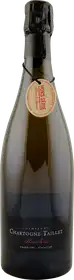
Chartogne-Taillet : Sainte Anne
In stock. Available for pick-up at store
Let's talk about this product!
A pairing in mind? A question about the vintage? Comparison with another product? Find the answers here...
Description
Tasting Notes and Characteristics of Sainte Anne by Chartogne-Taillet
Tasting
Color
The wine shows a pale hue with light orange reflections, a result of the significant share of chardonnay in the blend combined with the presence of black grape varieties and extended lees contact. The mousse is fine and delicate, forming a steady, lively effervescence in the glass.
Nose
The nose opens on white fruit such as apple, pear and white peach, layered with brioche and pastry notes reminiscent of fresh bread. Secondary aromas of light hazelnut, gentle smoke and chalky stone complement the fruit, echoing the sandy limestone soils of Merfy.
Palate
The palate is often generous and rounded on the attack, before the salts carried by the sandy soils bring a salivating, slightly bitter sensation in the mid-palate. The finish tightens into a firm, mineral frame that recalls the Champagne origin of the wine, with lingering notes of white fruit, light hazelnut and fresh bread.
Food and wine pairings
This Champagne is enjoyed as an aperitif, where its white fruit aromas and fine bubbles make for a lively opening to a meal. Its salinity and tight finish also allow it to accompany white meats served with cream and mushroom sauces, as well as delicate white fish prepared simply.
Other characteristics
This Sainte Anne Champagne is a Brut, with a dosage ranging between 4 and 7 grams of sugar per liter, calibrated to balance the vigor of the bubbles without masking the wine's density. The dosage liqueur is made from the same wine as the cuvée being disgorged, preserving aromatic and textural consistency throughout the blend.
A Village Champagne Reflecting the Terroirs of Merfy, Crafted by Chartogne-Taillet
The Estate
The Chartogne-Taillet domain was formally established in 1920, when Marie Chartogne married Étienne Taillet, uniting two families long rooted in the village of Merfy, in the Champagne region. Today the estate is run by Alexandre Chartogne, who took over in 2006 and oriented the domain toward a more precise, parcel-by-parcel approach. Covering around 11 hectares, Chartogne-Taillet is the only grower-producer remaining in Merfy, farming without herbicides and using horse plowing on part of its plots.
The Vineyard
The vines dedicated to this Champagne are located in Merfy, on the south and southeast facing slopes of the Massif de Saint-Thierry, within the Petite Montagne de Reims. The domain's roughly 11 hectares are divided into 13 plots in Merfy, complemented by a few additional parcels in the Côte des Blancs, at Avize and Oger. The soils form a mosaic of marine sands, loess and clay resting over deep chalk, a combination that leads the vines' roots to draw from two distinct environments. Four grape varieties are grown: chardonnay, pinot noir, pinot meunier and arbanne. The vineyard is farmed without herbicides, with cover crops planted between rows and horse plowing used to limit soil compaction.
Blend
As the only non-vintage cuvée of the domain, this Champagne is built around a base harvest that provides roughly half of the blend. The remaining half comes from reserve wines aged between two and five years, drawn from earlier vintages, which bring complexity and soften the vivacity of the younger wine.
Winemaking and aging
The wines destined for Sainte Anne are fermented with indigenous yeasts, without the addition of selected strains, in order to preserve the natural expression of each plot. Aging takes place mainly in oak barrels of 228, 350 and 2,000 liters, with a smaller portion of the reserve wines kept in tanks. The wine is bottled without filtration, a choice the domain considers essential to preserving its texture and the balance between richness and salinity.
Grape Varieties
This Champagne is composed of 50% chardonnay and 50% black grape varieties, mainly pinot noir.