Assistant



 Futures wines deliveryArrival in 2027 for Wine Futures 2024 or in 2028 for Wine Futures 2025
 Secure PaymentVisa, American Express, Mastercard...
 Guaranteed provenanceAuthenticity & Traceability of origin
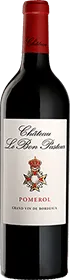
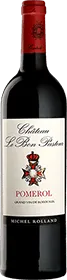
Château Le Bon Pasteur 2025
Wine Futures – delivery in early 2028

Let's talk about this product!
A pairing in mind? A question about the vintage? Comparison with another product? Find the answers here...
Description
Characteristics and tasting notes of Château Le Bon Pasteur 2025
Tasting
Appearance
The wine reveals a deep and intense colour, enhanced by delicate purple highlights.
Nose
The bouquet shows great finesse, releasing aromas of very ripe black fruits accompanied by subtle notes of liquorice.
Palate
The palate offers a fleshy and silky texture, supported by fine, powdery tannins. The whole stretches towards a saline finish that beautifully combines purity and aromatic freshness.
Food and wine pairings
This great wine will pair ideally with roasted or grilled red meats, slow-cooked dishes in sauce, fine roasted poultry or aged hard cheeses.
Serving and ageing
To fully appreciate this 2025 vintage, it is recommended to serve it at a temperature of around 15.5°C and to decant it one to two hours before tasting. This wine has excellent potential and can be kept in the cellar to be enjoyed until around 2050.
The elegance and precision of a Pomerol wine
The estate
Founded in 1920 by Joseph and Hermine Dupuy, Château Le Bon Pasteur is an emblematic property of the Bordeaux region. The estate covers a 5.20-hectare vineyard at the heart of the prestigious Pomerol appellation. Historically shaped by the famous oenologist Michel Rolland, who made it his laboratory of excellence, the estate has belonged since 2013 to the Goldin Group, led by Pan Sutong. Today, the technical team passionately perpetuates the identity of this brand renowned for its wines combining power, sensuality and precision.
The vineyard
The terroir of this Pomerol estate rests on gravel-clay soils with a subsoil of blue clays, particularly conducive to water regulation. The vines, averaging 40 years old, are planted at a density of 7,000 vines per hectare. The vineyard is managed with a sustainable and environmentally friendly approach, certified HVE and ISO 14001. The teams practice green harvesting, as well as leaf removal and thinning to ensure optimal sanitary quality of the grapes.
The vintage
The year was mainly marked by a very dry summer period. Fortunately, the blue clay subsoils played a crucial role in limiting the water stress of the vines. The growing cycle began with budburst on 25 March, followed by flowering under ideal conditions around 25 May. While the heat and drought slowed veraison, the rainfall in July helped to restart the process. The harvest took place early and quickly, from 9 to 18 September, yielding a perfectly healthy crop.
Vinification and ageing
The manual harvest undergoes a rigorous double sorting, before and after destemming, complemented by meticulous intra-plot selection. Winemaking begins with a cold maceration lasting five to seven days. Fermentation then takes place through integral vinification in 225-litre barrels. Finally, the wine benefits from a careful 15-month ageing in French oak barrels, 50% of which are new, allowing its structure to be refined. Alcohol: 14% vol.
Grape varieties
80% Merlot and 20% Cabernet Franc.