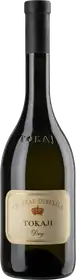
Chateau Dereszla : Dry Tokaji 2023
In stock. Available for pick-up at store
Let's talk about this product!
A pairing in mind? A question about the vintage? Comparison with another product? Find the answers here...
Description
Characteristics and tasting tips for Dry Tokaji 2023 Chateau Dereszla
Tasting
Nose
The nose is led by lemon and other citrus fruits, with white flowers and a hint of muscat. A subtle spicy note sits in the background. Fruity and mineral at once, it shows good aromatic complexity.
Palate
The palate is fresh and mineral, with a moderate body and a lively, structured acidity. A slightly steely edge gives it tension, while aging on fine lees adds a touch of roundness. The finish is long and bright, with persistent minerality.
Food and wine pairings
This dry white works well as an aperitif. It also suits grilled fish, fish in sauce, and seafood. Its freshness and floral aromas match sushi and light Asian dishes. Other good partners include seafood salads, ceviche, and dishes seasoned with lemon and fresh herbs.
Serving and cellaring
Serve Dry Tokaji 2023 at around 46°F (8°C) to highlight its freshness and mineral tension. It is a young, vibrant white meant to be enjoyed in its early years. It can be drunk now and through 2027 approximately.
Other characteristics
This is a dry white wine with a moderate alcohol content of about 12% ABV. Labeled figures vary slightly depending on the market.
A fresh, mineral dry Tokaji from Chateau Dereszla
The Estate
Chateau Dereszla is based in Bodrogkeresztúr, in the Tokaj wine region. Its cellar was first mentioned in the early 15th century. The winery in its current form dates to 2000, when the d'Aulan family, owners of Champagne Piper-Heidsieck, acquired it. Since 2016, it has belonged to the Hungarian group Búzakalász 66 Kft, controlled by Lőrinc Mészáros. The estate farms about 27 hectares across 15 distinct terroirs. Winemaker Edit Bai oversees production, which spans dry wines, Aszú, and Eszencia, with roughly 80% exported.
The Vineyard
This Tokaji comes from selected plots within the estate's vineyards. The estate's soils are mainly volcanic rock, with layers of loess. The furmint and muscat grapes grow in plots south of Tokaj, while the kabar comes from plots to the north. This mix of origins adds nuance to the blend. The grapes are picked by hand in mid-October.
Winemaking and aging
For Dry Tokaji 2023, the grapes are harvested by hand. The must ferments in temperature-controlled stainless steel tanks, which preserves the freshness of the aromas. The wine then ages for six months on fine lees. 85% of the volume rests in stainless steel and 15% in new oak barrels, which adds texture without marking the wine with wood.
Grape Varieties
Furmint forms the backbone of the blend, generally at around 80 to 85%. It is completed by Hárslevelű, Kabar, and Sárgamuskotály (Yellow Muscat). Exact proportions vary slightly depending on the source.