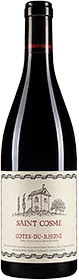
Château de Saint Cosme : Gigondas 2023
In stock. Available for pick-up at store
Let's talk about this product!
A pairing in mind? A question about the vintage? Comparison with another product? Find the answers here...
Description
Characteristics and tasting tips for the Gigondas 2023 from Château de Saint Cosme
Tasting
Color
The wine shows a deep ruby color shading toward purple, with violet highlights in its youth.
Nose
The nose is intense and expressive. Red and black fruit (raspberry, strawberry, red plum, blackcurrant) mingles with violet and lavender. Garrigue notes of thyme and rosemary follow, along with licorice, pepper and a touch of incense. A mineral thread of crushed limestone adds contrast.
Palate
Full-bodied and pulpy, the palate is balanced by a lively inner energy. The tannins are powdery and polished. Bright acidity carries the wine's richness to a long, saline finish with spicy, stony and mineral notes, including iron and warm stone.
Food and wine pairings
This Gigondas pairs naturally with Provençal and Mediterranean cooking. Slow-cooked lamb with garlic and rosemary is the classic match suggested for the appellation. It also suits a daube simmered with red wine, herbs and olives, and roasted Mediterranean vegetable gratins. Roasted duck breast with a blackcurrant or blackberry reduction works well too. After the main course, it can accompany semi-hard cheeses of moderate strength, such as Comté.
Serving and cellaring
A moderate decanting is recommended for the Gigondas 2023 in its early years, to open up the garrigue, spice and dark fruit aromas. Serve it at about 61–64°F (16–18°C), so the alcohol stays discreet and the texture comes through. A large glass, such as a Bordeaux or Rhône style, lets the wine breathe. Critics suggest it can be enjoyed now or held.
Other characteristics
This is a dry red wine with an alcohol content of around 15% ABV.
A Gigondas from the Rhone Valley built on old-vine Grenache, with garrigue and a saline finish
The Estate
Château de Saint Cosme is located in Gigondas, in the southern Rhone Valley. Gallo-Roman fermentation vats carved into the rock lie beneath the château. The estate is documented from 1416, and the Barruol family has farmed it for fifteen generations. Louis Barruol, who took over in 1992, began bottling under the estate's own name and leads the property today. Its 22 to 25 hectares of old vines, averaging about sixty years of age, have been certified organic since 2010. Critics often describe it as the leading estate of Gigondas.
The Vineyard
The Gigondas vineyards of Château de Saint Cosme lie at the foot of the Dentelles de Montmirail, north of the village, on sloping sites. The estate sits at the crossing of two geological faults. This creates a mosaic of limestone, marl and clay soils, along with a cool, late-ripening microclimate. The old vines yield naturally low crops. They are farmed organically, without synthetic herbicides or fungicides, and much of the work is done by hand. Cover crops are sown and compost is applied to maintain soil life.
Winemaking and aging
The Gigondas 2023 is based mostly on Grenache, largely vinified as whole clusters. It is aged in used barrels rather than new oak, which leaves room for the fruit and garrigue aromas and avoids heavy vanilla or toasty notes.
Grape Varieties
Grenache (dominant)
Mourvèdre