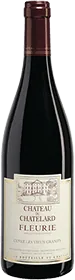
If the Moulin-à-Vent appellation is cited as the king of the Beaujolais, the Fleurie appellation is its queen. In the heart of the Beaujolais mountains, the hills carved out by the tributaries of the Saône river below form a typical Beaujolais vineyard landscape. Vines have been present in the region since 987. Viticulture then developed in the 15th century after the enrichment of certain bourgeois families from Lyon, so that in the 18th century the wines of "Fleurie" were valued beyond the French borders. The appellation d'origine contrôlée was recognised in 1936.
The continental climate is subject to southern influences. At dawn, the south-east facing slopes enjoy maximum sunshine. The seasons are mild, with a cold, dry winter giving way to a mild spring, sometimes affected by late frosts. The northern winds bring a fresh air to the vineyard in summer and autumn.
Gamay, the emblematic black grape variety of Beaujolais, is planted on a dry granite soil with a clayey tendency in the south of the commune of Fleurie. Composed of 13 climats spread over more than 860 hectares, the Fleurie vineyard is one of the most beautiful in Beaujolais.
The wines of Fleurie have a purplish red colour. The nose is floral with violet and iris scents. These are elegant and feminine wines.