Assistant


 Free delivery serviceFree ground shipping in NYC 5 boroughs for orders over $150 and free ground shipping for all instock orders over $450

 Secure PaymentVisa, American Express, Mastercard...
 Guaranteed provenanceAuthenticity & Traceability of origin
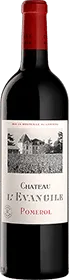
Chateau l'Evangile 2011
In stock. Available for pick-up at store
Let's talk about this product!
A pairing in mind? A question about the vintage? Comparison with another product? Find the answers here...
Description
Tasting Notes and Serving Recommendations for Château l'Evangile 2011
Tasting
Color
This Château l'Evangile 2011 displays a dense, dark ruby robe with violet highlights, a visual signal of its concentration and the ripeness of the fruit at harvest.
Nose
The nose is powerful and expressive, built around black and red fruit such as blackberries, blackcurrant and morello cherry, layered with licorice, cocoa and toasted oak. With aeration, the wine reveals a more voluptuous bouquet, where dark, earthy notes mingle with the fruit.
Palate
The attack is dense and concentrated, carried by firm yet polished tannins and a well-integrated acidity. The texture is rich and silky, leading to a long finish marked by cocoa and dark fruit, with a structure that calls for patience before it fully unfolds.
Food and wine pairings
This wine pairs naturally with roasted or grilled red meats, as well as game or poultry dishes served with rich sauces, mushrooms or truffle notes. It also stands up well to aged hard cheeses, whose intensity echoes the depth of the wine.
Serving and cellaring
Decanting is recommended to allow the aromas to open fully, as this Château l'Evangile 2011 can appear somewhat reserved upon opening. Serve at a temperature between 61°F and 64°F (16°C to 18°C). According to critics' estimates, this wine can be cellared until approximately 2025, with some assessments suggesting it may continue to evolve favorably beyond that point.
Other characteristics
This vintage shows an alcohol level of 13.6%, a pH of 3.7 and a total polyphenol index (IPT) of 76, reflecting a wine with substantial tannic matter balanced by fresh acidity. Yields were kept low, at around 32 hl/ha.
A Structured Pomerol Shaped by Gravel and Ferrous Clay Soils
The Estate
Château l'Evangile is located in the Pomerol appellation, on the right bank of Bordeaux, bordered by Château Pétrus to the north and separated from Cheval Blanc by a single country lane. The estate took its current name in the early 19th century, under the ownership of Isambert, after having first appeared on local records in the mid-18th century under the name Fazilleau. Since 1990, the property has belonged to Domaines Barons de Rothschild (Lafite), with technical direction currently led by Juliette Couderc. The vineyard covers approximately 22 hectares and is recognized for its gravel-topped plateau terroir and its ongoing shift toward organic and biodynamic farming.
The Vineyard
The vines of Château l'Evangile grow on the Pomerol plateau, within a distinctive band of surface gravel resting over a subsoil containing ferrous clay, a configuration that favors both drainage and water retention. The vineyard is planted predominantly with merlot, complemented by a meaningful share of cabernet franc, with an average vine age of around 36 years. Farming practices have moved toward organic methods, officially certified in 2021, alongside the introduction of biodynamic preparations and cover crops to support biodiversity across the plateau.
The Vintage
The 2011 vintage in Bordeaux followed the more opulent 2009 and 2010 years, and is generally regarded as a more classic growing season, requiring careful attention to ripeness and acidity. At Château l'Evangile, harvest was conducted late to ensure full maturity: merlot was picked between September 6 and 21, while cabernet franc, harvested slightly later, was gathered between September 19 and 21. Strict selection in the vineyard contributed to the low yield recorded for the year.
Winemaking and aging
This Château l'Evangile 2011 was aged for 18 months in oak barrels, with 70% new oak used during the process, reflecting the estate's practices at the time for its grand vin. Vinification followed a parcel-by-parcel approach, allowing each section of the vineyard to be vinified separately before the final blend was assembled with precision.
Grape Varieties
This vintage is composed of 94% merlot and 6% cabernet franc.