

Assistant
Château Ducru-Beaucaillou : Iconic Saint-Julien Second Growth
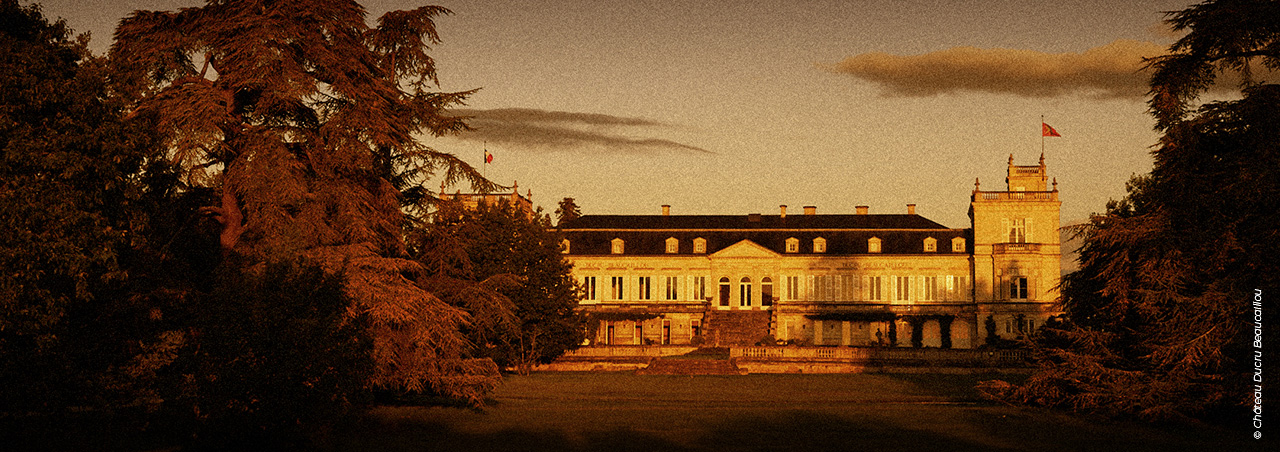
Château Ducru-Beaucaillou is a renowned Saint-Julien Second Growth celebrated for its “beautiful stone” terroir, meticulous plot-by-plot winemaking, and refined, age-worthy Bordeaux wines crafted by the Borie family.
An Emblematic Saint-Julien Estate
Expanding over 75 hectares in the noble Saint Julien appellation of Bordeaux’s Left Bank, Chateau Ducru-Beaucaillou is one of the most emblematic properties of the Médoc. Here, a privileged terroir of large, well-draining stones (which appear in the name of the property, translating directly to “beautiful stones”) are expressed through two signature wines: Ducru-Beaucaillou and Croix de Beaucaillou. The estate proudly bears the title of 1855 Second Classified Growth and is currently managed by the charismatic Bruno Borie, third generation of his family since his grandfather purchased the property in 1941.
Recognized as an icon of Bordeaux’s Left Bank, Château Ducru-Beaucaillou is considered one of the most prestigious and influential estates of the Médoc. Located along the banks of the Garonne River and near the Gironde estuary, the vineyards benefit from a unique microclimate, with the river acting as a natural thermal regulator. This moderates temperatures, protects against frost, and contributes to consistent grape ripening, helping the wines achieve their signature elegance and balance. Often cited as a benchmark of the Saint-Julien appellation, Château Ducru-Beaucaillou is internationally recognized for combining power, finesse, and remarkable aging potential.
Château Ducru-Beaucaillou Through the Centuries
Origins of the Estate (1720)
The history of Chateau Ducru-Beaucaillou dates back to 1720, when it was first purchased by the Bergeron family, one of the five families whose legacy is closely tied to the estate and its wines. In 1795, following the French Revolution, Bernard Ducru bought the property and added his family name to it. Ducru also invested in improving both the vineyard and cellar, commissioning a Parisian architect to rebuild the existing chateau in a chartreuse style. In the famous 1855 classification, Chateau Ducru-Beaucaillou became a Second Growth, earning a privileged title shared by only fifteen Bordeaux estates.
The Johnston Era and Technical Innovation
In 1866, the property passed to the Johnston family, when Lucie-Caroline Dassier, wife of Nathaniel Johnston, purchased it for one million francs. Johnston became a highly influential figure in the region, serving as mayor of Saint Julien between 1903 and 1908. Alongside his vineyard manager Ernest David, he is credited with inventing the “Bordeaux Mixture,” a copper-based vine treatment that remains a milestone in viticulture for protecting vines from mildew.
Johnston’s second wife, Princess Marie Caradja of Constantinople, also left a lasting mark on the estate by redesigning the château to include a Victorian tower and surrounding it with a landscaped park planted with exotic species, reinforcing the château’s stately character.
From Economic Crisis to the Borie Family
In 1929, the Economic Crisis forced the Johnston family to sell the property, which was acquired by the Desbarat family of wine merchants. After a decade marked by instability and the outbreak of World War II, the estate was sold once again. In 1941, wine merchant Francis Borie purchased Château Ducru-Beaucaillou, laying the foundations for the modern era of the estate.
Francis Borie later handed down his properties to his son, who divided them among his three children. François-Xavier Borie took ownership of the Pauillac Fifth Growth Grand-Puy-Lacoste, while Bruno Borie became managing director of Château Ducru-Beaucaillou, which he owns jointly with his sister.
Modern Leadership and Global Reputation
Working closely with renowned consultants Jacques and Eric Boissenot, Bruno Borie has, over the past decade, intensified the estate’s focus on vineyard precision, implementing stricter plot-by-plot selections. Drawing on his international experience, including over twenty years at the helm of the Lillet aperitif brand, Borie has further strengthened the global reputation of Château Ducru-Beaucaillou and its wines. Under his leadership, the estate continues to produce consistently high-quality vintages that demonstrate both elegance and power.
A Terroir That Birthed a Second Classified Growth
The Meaning of “Beaucaillou”
The terroir of the Ducru-Beaucaillou estate has long been considered the cornerstone of its identity, as reflected in the estate’s name. “Beaucaillou” refers to the “beautiful stones” that dominate the vineyards and provide key advantages for vine cultivation. These stones promote excellent drainage, reflect sunlight onto the grapes, store daytime heat and release it at night, while also preventing excessive evaporation during the summer months.
The 6–8 meter layer of Günz gravel was deposited by the Garonne during the Quaternary period and is characteristic of the Saint-Julien appellation. Beneath this gravel lies a tertiary substratum composed of Oligocene mud and Eocene limestone. Faithful to the style of great Médoc wines, Château Ducru-Beaucaillou displays a refined structure, remarkable balance, and extraordinary depth, giving the wine a rare density and complexity.
Proximity to the Garonne
The vines, averaging 35 years of age, grow directly along the banks of the Garonne River. This proximity plays a crucial role in temperature regulation, protecting the vineyard from frost and contributing to even ripening throughout the growing season.
Vineyard Composition and Density
The 75-hectare estate is planted at an average density of approximately 10,000 vines per hectare, with 70% Cabernet Sauvignon and 30% Merlot. Harvesting and vinification are conducted on a strict plot-by-plot basis, with parcels divided according to topographical and soil differences. Looking ahead, the estate plans to introduce cluster-by-cluster vineyard management using advanced electrode and GPS technologies.
Winemaking at Château Ducru-Beaucaillou
Gentle Handling and Precision
Following a manual harvest, grapes are sorted directly in the vineyard using mobile tables to ensure that only healthy fruit reaches the cellar. Located beneath the château, the vat room allows each plot to be vinified separately. Fermentation and gentle extraction are followed by malolactic fermentation in vat, after which press wine drains directly into barrel.
Barrel Aging and Blending
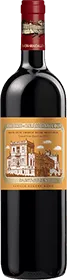
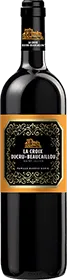
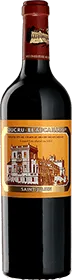
The estate’s emblematic blend mirrors vineyard plantings, combining 70% Cabernet Sauvignon and 30% Merlot. Château Ducru-Beaucaillou is aged for approximately 18 months in 90% new French oak barrels, consistent with the traditions of the Médoc’s classified growths. Croix de Beaucaillou, aged for 12 months in 60–70% new oak, is produced from a distinct set of parcels with their own unique characteristics. Roughly half of the vineyard surface is dedicated to each wine.
All wines mature in 225-liter Bordeaux barrels sourced from five carefully selected cooperages and are bottled using corks from five specific producers to ensure consistency and quality.
Signature Style, Aging Potential, and Food Pairings
The Quintessential Saint-Julien Expression
The wines of Château Ducru-Beaucaillou are widely regarded as archetypes of the Saint-Julien appellation. The gravel-rich terroir produces deeply colored, ripe, and powerful wines that remain beautifully balanced. Known for their silky texture, elegance, and refinement, these wines combine concentrated black fruit flavors with remarkably fine-grained tannins, embodying the style emblematic of Saint-Julien.
La Croix de Beaucaillou
La Croix de Beaucaillou, more approachable in its youth, is a distinct wine in its own right: charming, intensely fruity, with perfectly balanced power and a deliciously smooth texture that delights lovers of Médoc wines.
Cellaring and Serving Recommendations
For optimal enjoyment, mature bottles should be served between 16–18°C (60–65°F). Younger vintages benefit from decanting one to two hours before service to fully reveal their aromatic complexity. Both wines are true vintages for aging, with most developing gracefully for at least 10 years and top vintages capable of evolving for several decades.
Gastronomy and Food Pairings
The complexity and elegance of Château Ducru-Beaucaillou make it an ideal companion to a wide range of refined dishes. Bruno Borie’s passion for gastronomy is well known in Bordeaux, and he often welcomes guests into the château’s professional kitchen to demonstrate pairings tailored to the estate’s wines. A mature vintage such as Château Ducru-Beaucaillou 1995 pairs beautifully with foie gras poêlé or a classic Bordeaux-style entrecôte.
You may like
Château Mouton Rothschild is a legendary Pauillac First Growth celebrated for its prestigious history, artist-designed labels, exceptional gravel terroir, and powerful yet refined Bordeaux wines with remarkable aging potential.
2/6/2026
Château Cos d’Estournel is an iconic Saint-Estèphe Second Growth, famed for its exotic palace, exceptional terroir diversity, and innovative gravity-fed winery producing powerful, elegant Bordeaux wines.
1/23/2026
Discover the legacy of Cakebread Cellars, a Napa Valley family winery. From Rutherford vineyards to award-winning wines, the Cakebreads combine craftsmanship, sustainability, and innovation.
10/16/2025
Explore Château Lafite-Rothschild, an icon of Pauillac and a symbol of Bordeaux perfection. From its 17th-century roots to its refined terroir, learn how this Premier Grand Cru continues to define fine wine excellence.
10/7/2025
Chateau Angelus, one of Saint-Emilion’s top Premier Grand Cru Classe A estates, offers exceptional Bordeaux wines from organic vineyards, rich history, and a legacy of family winemaking excellence.
10/6/2025
The exceptional concentration of top-tier wineries and renowned appellations has long made Bordeaux a place of longing for fine wine enthusiasts and discerning hedonists around the world.
4/18/2025